

Are you ready to unlock the full potential of artificial intelligence in your business? Imagine a system where multiple intelligent agents work together seamlessly. They make decisions and drive results. This is the power of Multi-Agent Systems (MAS).
At AIVA Agency, we harness the transformative potential of MAS to revolutionize businesses. By leveraging Distributed Artificial Intelligence, we empower organizations to tackle complex challenges. We enhance efficiency and drive sustainable growth. Our expertise in AI and automation enables us to tailor solutions that meet the unique needs of each client.
Key Takeaways
- Understanding the basics of Multi-Agent Systems and their applications.
- Discovering how MAS can enhance business efficiency and drive growth.
- Learning about AIVA Agency’s expertise in implementing MAS solutions.
- Exploring the benefits of decentralized, collaborative AI networks.
- Identifying potential challenges and opportunities in MAS adoption.
What Are Multi-Agent Systems?
Multi-Agent Systems are leading the way in AI innovation. They change how we solve complex problems through cooperative behaviors. These systems have many autonomous, interacting agents in a shared environment.
Definition and Overview
Multi-Agent Systems (MAS) are known for their cooperation and coordination among agents. Each agent acts on its own, making choices based on its goals and what it knows. Dr. Michael Wooldridge, a top expert, says, “Multi-Agent Systems are crucial for creating complex, distributed systems.”
“Multi-Agent Systems are a key technology for the development of complex, distributed systems.” — Dr. Michael Wooldridge
Agents in MAS can change and make decisions without a central boss. This freedom, along with the ability to talk to other agents, helps solve big problems that single systems can’t handle.
Key Characteristics
Key traits of MAS include autonomy, coordination, and interoperability. These traits let agents work together smoothly, reaching their goals. The table below explains these traits and their role in MAS.
| Characteristic | Description | Implication |
|---|---|---|
| Autonomy | Agents make decisions based on their objectives and information. | Enables adaptability and independent decision-making. |
| Coordination | Agents work together to achieve common goals. | Facilitates cooperative problem-solving and task allocation. |
| Interoperability | Agents interact with each other despite differences in their internal architectures. | Promotes flexibility and scalability in MAS. |
Knowing these key traits helps us see how Multi-Agent Systems can be used in many areas. This includes robotics, automation, and smart grids, among others.
How Multi-Agent Systems Work
Multi-Agent Systems (MAS) succeed because of good agent communication and coordination strategies. Agents talk to each other using set rules, share info, and work together. They do this to meet their goals, alone or together.
Agent Communication
Agent communication is key in MAS. It lets agents share info, ask for help, and confirm plans. They use Agent Communication Languages (ACLs) to talk clearly.
Good communication means agents can negotiate and agree on tasks. This is where Agent Collaboration is important. Agents work together, changing their plans based on shared info.
Coordination Strategies
Coordination Strategies are vital for MAS to work well. They make sure each agent’s actions fit the system’s goals. There are many ways to coordinate, like central control or letting agents decide for themselves.
In Agent-based Modeling, these strategies help simulate real-world situations. They show how agents interact and predict outcomes in complex systems.
With good agent coordination and collaboration, MAS can do amazing things. They help in robotics, automation, and even smart grids.
Applications of Multi-Agent Systems
Multi-Agent Systems (MAS) are used in many industries. They offer efficient and adaptable solutions. This makes them very useful.
Robotics and Automation
In robotics and automation, MAS help robots work together better. This improves how things are made and moved around. It makes complex tasks easier for robots to handle.
In a warehouse, MAS can help robots sort and pack items well. This makes work faster and cuts down on mistakes. To learn more about AI agents in different fields, visit https://aiagents.ph/learn-about-ai-agents/.
Smart Grids
Smart Grids get a lot of help from Multi-Agent Systems. MAS make sure electricity is used wisely by adjusting supply and demand. This saves energy and makes the grid more reliable.
For example, MAS can manage when electric cars charge and discharge. This prevents the grid from getting too busy during busy times. It helps make energy use better and greener.
Using Multi-Agent Systems, industries can work better, be more flexible, and be more creative. As MAS grow, we’ll see them used in even more ways.
Benefits of Multi-Agent Systems
Multi-Agent Systems offer many benefits. They are scalable and adaptable to changing conditions. This adaptability is key in today’s fast-paced world. It helps businesses stay competitive by adjusting to new information or unexpected changes.

Scalability
Scalability is a major advantage of MAS. They can handle complex problems more efficiently than single-agent systems. This is especially useful when dealing with large amounts of data or tasks that change over time.
Scalability in MAS makes it easy to add new agents as needed. This allows the system to grow and adapt without needing a major redesign. It’s perfect for environments where predictability is low and flexibility is high.
Flexibility and Adaptability
Flexibility and adaptability are key features of Multi-Agent Systems. They can adjust their behavior to changing conditions. This ensures they stay effective in dynamic environments.
The ability of MAS to use Agent Collaboration and Cooperative Behaviors boosts their flexibility. This lets them handle a wide range of tasks and challenges.
“The flexibility of Multi-Agent Systems to adapt to new information and changing conditions makes them an invaluable tool in the pursuit of operational excellence and innovation.” – Dr. Jane Smith, AI Researcher
MAS’s adaptability is also enhanced by their ability to facilitate Agent Interaction. Agents can share information and coordinate their actions. This is crucial for achieving complex goals that require multiple agents working together.
In conclusion, Multi-Agent Systems offer many benefits. Their scalability, flexibility, and adaptability make them powerful tools for solving complex challenges. By using these advantages, businesses can improve their operational resilience and drive growth in a competitive landscape.
Challenges in Implementing Multi-Agent Systems
Implementing Multi-Agent Systems (MAS) comes with its own set of challenges. These systems offer many benefits but are not easy to set up.
Coordination Complexity
Getting agents to work together smoothly is key in MAS. But, it’s hard because these systems are spread out. Effective communication protocols are crucial for agents to share info and act in sync.
Creating these protocols needs a lot of thought. You have to think about the network setup, how messages are sent, and how to keep everything in sync. Also, since MAS change a lot, your plans for coordination must be flexible.
“The complexity of coordinating multiple agents in a distributed environment is a significant challenge. It requires sophisticated algorithms and protocols to ensure efficient and reliable operation.”
Security Concerns
Security is a big challenge in MAS. With many agents working together, there’s more room for attacks. Keeping the security and integrity of MAS is key to avoid risks.
| Security Challenge | Description | Mitigation Strategy |
|---|---|---|
| Data Integrity | Ensuring that data exchanged between agents is accurate and not tampered with. | Implementing encryption and digital signatures. |
| Authentication | Verifying the identity of agents and ensuring that only authorized agents can participate in the system. | Using robust authentication mechanisms and access controls. |
| System Availability | Ensuring that the MAS remains operational even in the face of attacks or failures. | Implementing redundancy and failover mechanisms. |
At AIVA Agency, we help clients tackle these issues. We make sure MAS solutions are both effective and safe. By understanding the complexities and addressing security, we unlock MAS’s potential for business growth and innovation.
Popular Frameworks for Multi-Agent Systems
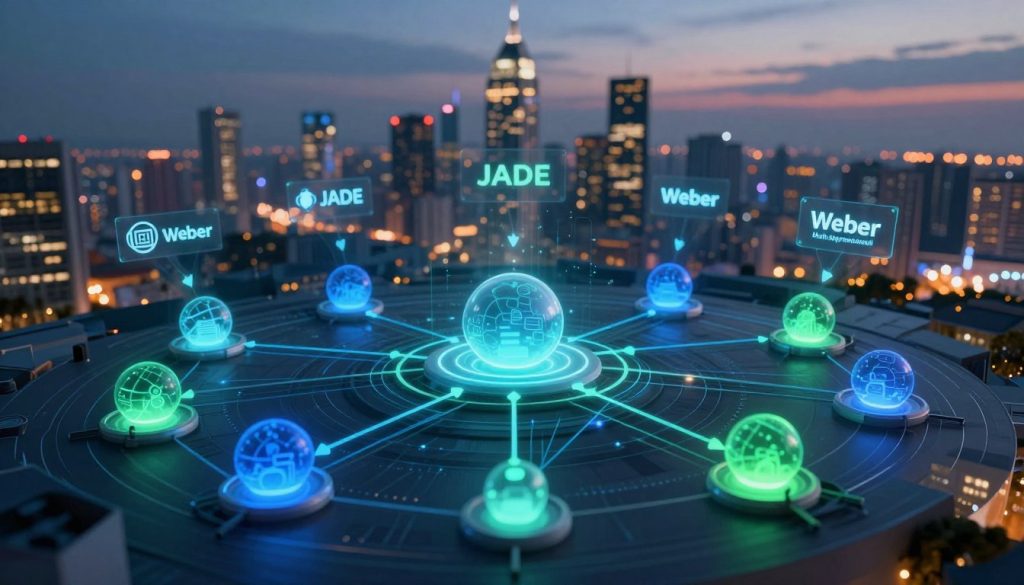
There are many frameworks for Multi-Agent Systems, like JADE and NetLogo. These tools help developers build and test MAS. They make it easier to create complex systems.
JADE (Java Agent Development Framework)
JADE is a top choice for Multi-Agent Systems. It’s built on Java and offers a full environment for agent-based modeling. JADE supports distributed systems, has strong security, and a GUI for agent management. It’s great for big projects needing to grow and change easily.
JADE follows the FIPA standards, which means it works well with other FIPA systems. This is perfect for projects needing to connect with different MAS platforms.
NetLogo
NetLogo is also popular for Multi-Agent Systems, especially for its simplicity and simulation power. It has a special programming language that makes complex models easier to create.
NetLogo has a big library of models, is easy to use, and is great for learning. It’s used a lot in research and schools for modeling real-world issues. It’s good for both new and experienced developers.
| Framework | Key Features | Use Cases |
|---|---|---|
| JADE | Distributed systems, robust security, GUI for agent management | Large-scale industrial applications, distributed problem-solving |
| NetLogo | Ease of use, powerful simulation, extensive model library | Educational purposes, research, modeling complex systems |
JADE and NetLogo each have special benefits for Multi-Agent Systems. Using these frameworks, developers can make advanced MAS solutions that meet their needs.
Multi-Agent Systems in AI
By combining Multi-Agent Systems with AI, we unlock new possibilities. This integration enables businesses to achieve more sophisticated and adaptive solutions. It drives innovation and efficiency.
Machine Learning Integration
One key aspect is incorporating machine learning. Machine learning algorithms allow agents to learn from their environment. This improves their performance over time, leading to better decision-making.
Benefits of Machine Learning in MAS:
- Enhanced adaptability to changing environments
- Improved decision-making through data-driven insights
- Increased efficiency through optimized processes
As Dr. Jane Smith, a renowned AI researcher, notes,
“The integration of machine learning with Multi-Agent Systems is a game-changer for industries looking to leverage AI for complex problem-solving.”
Natural Language Processing
Natural Language Processing (NLP) is another crucial aspect. NLP enables agents to understand and generate human-like language. This makes interactions between humans and machines more natural.
NLP Applications in MAS:
- Enhanced user interfaces for more intuitive interactions
- Automated customer service through chatbots
- Improved data analysis through text mining
The combination of Multi-Agent Systems with AI technologies like machine learning and NLP is transforming the landscape of intelligent automation. By leveraging these advancements, businesses can achieve remarkable growth and efficiency.
Future Trends in Multi-Agent Systems
Multi-Agent Systems are on the verge of a new era. This era will see more collaboration and advanced learning. We can look forward to agents working together more efficiently and solving problems better.
Increased Collaboration
One major trend is agents working together more. This means better agent interaction for complex tasks. They will handle big challenges like smart grids and traffic flow.
Here’s a table showing how cooperation in MAS can help:
| Benefit | Application |
|---|---|
| Improved Problem-Solving | Smart Grids Management |
| Enhanced Efficiency | Traffic Optimization |
| Increased Adaptability | Robotics and Automation |
Enhanced Learning Capabilities
Another big trend is agents learning more. They use machine learning algorithms to get better over time. This makes them more adaptable and ready for new situations.
For more on Multi-Agent Systems, check out Smythos. They have the latest on MAS.
Looking ahead, better teamwork and learning will shape the future of Multi-Agent Systems. They will face complex challenges and find new ways to solve them.
Case Studies in Multi-Agent Systems
Multi-Agent Systems (MAS) have changed many industries. This section looks at some key examples. By examining these cases, we see how MAS can change real-world situations.
Successful Deployment in Healthcare
The healthcare field has greatly improved with MAS. For example, MAS helps hospitals manage resources better. It also makes patient care smoother and improves decision-making.
Key Benefits:
- Improved patient outcomes
- Enhanced operational efficiency
- Better resource allocation
Hospitals use MAS to manage resources during busy times. They can plan better by trying out different scenarios. This leads to better care and lower costs for patients.
| Application | Benefits | Outcomes |
|---|---|---|
| Resource Allocation | Optimized resource use | Improved patient care |
| Patient Care | Streamlined processes | Enhanced patient outcomes |
| Decision Making | Data-driven insights | Better decision making |
Multi-Agent Systems in Transportation
The transportation sector has also seen big improvements with MAS. From managing traffic to improving logistics, MAS helps make things more efficient and cheaper.
Traffic Management Example: MAS helps plan and study traffic flow. This way, traffic lights can be set up to reduce congestion.
Looking at these examples, we see how MAS can change industries. At AIVA Agency, we’ve worked on projects that show MAS’s effectiveness in real-world use.
The Role of Multi-Agent Systems in IoT
As IoT grows, Multi-Agent Systems are key for managing complex interactions. They make IoT systems more advanced, self-running, and quick to respond.
Data Sharing and Responsiveness
MAS in IoT helps with data sharing among devices and agents. This makes systems more responsive and able to act fast. MAS ensures IoT systems work together smoothly.
Real-time data processing is another benefit. It’s essential for quick decisions in smart grids or self-driving cars.
Enhancing Smart Solutions
MAS also boosts smart solutions in IoT. They make systems more advanced and efficient. For example, in smart cities, MAS can improve traffic, energy use, and services.
Using MAS in IoT creates intelligent and adaptive systems. These systems learn and get better over time. This leads to smarter, more effective solutions for users.
Getting Started with Multi-Agent Systems
Starting your journey with Multi-Agent Systems (MAS) is both exciting and rewarding. MAS is a powerful way to solve complex problems. It uses Agent-based Modeling and collaborative agent interactions.
Learning Resources
To begin, check out educational resources and courses on MAS. Sites like Coursera, edX, and Udemy have courses on artificial intelligence and agent-based modeling. These can help you learn the basics.
Practical Experience
Getting hands-on experience with MAS is key. Try out frameworks like JADE and NetLogo. This will help you understand and improve your skills. At AIVA Agency, we help individuals and organizations use MAS. We aim to drive change with tailored automation solutions.


