
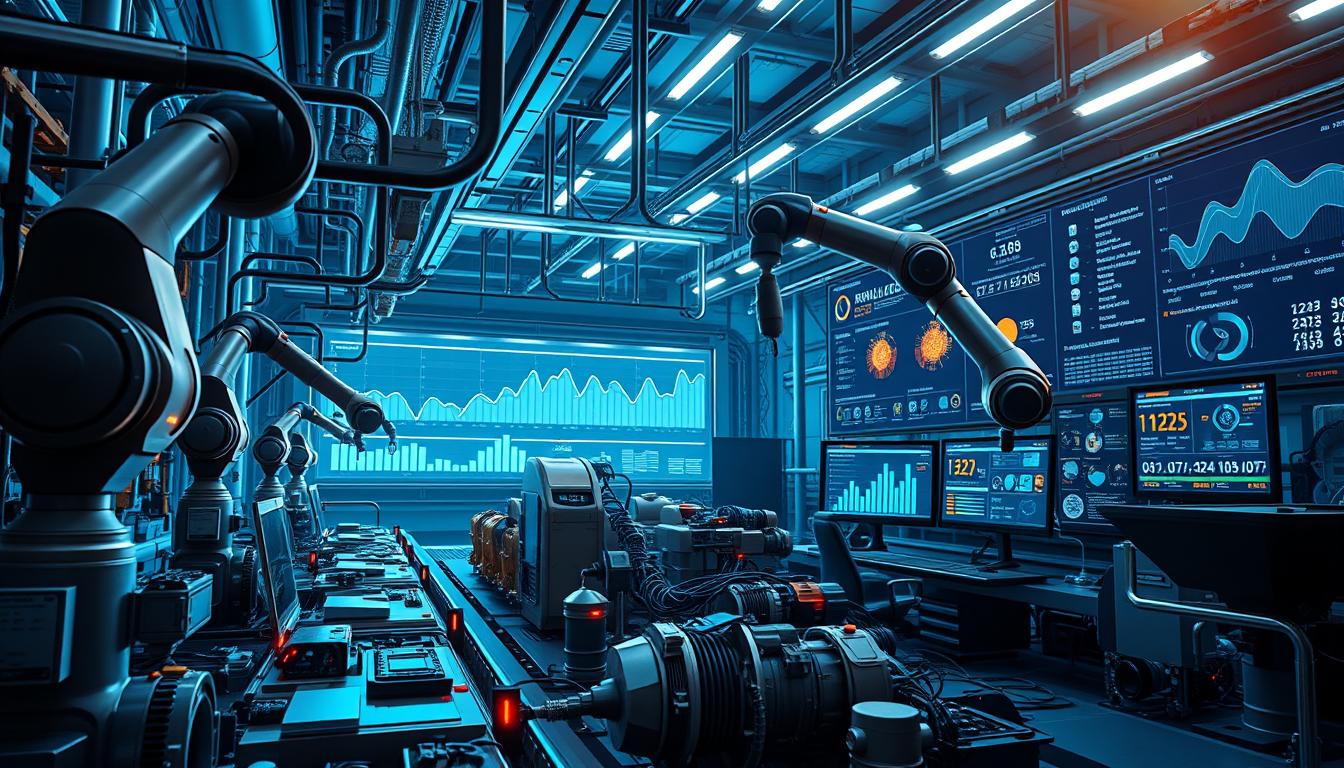
Did you know that factories lose between 5% and 20% of their manufacturing capacity due to equipment failure and other causes of downtime? This staggering statistic highlights the importance of implementing AI for Predictive Maintenance & Operations to minimize losses and maximize efficiency. By harnessing the power of artificial intelligence and predictive analytics, companies can predict equipment failures, reduce downtime, and optimize maintenance schedules – all of which are crucial for staying ahead in today’s fast-paced industrial landscape.
We empower businesses through AI and human expertise to achieve growth while saving time and resources. Our approach to AI for Predictive Maintenance & Operations is centered around providing actionable insights that drive efficiency and productivity. You can learn more about how AI is transforming businesses by visiting AI-powered solutions that are tailored to your needs.
Key Takeaways
- AI-driven predictive maintenance can significantly reduce unexpected downtime by enhancing machine reliability.
- Predictive maintenance can reduce downtime by as much as 15% and decrease maintenance costs by up to 25%.
- AI algorithms can help extend the lifecycle of machinery by preventing premature wear and tear, optimizing maintenance schedules, and flagging maintenance needs in real time.
- Effective predictive maintenance can extend asset lifetimes by approximately 20-40%, thereby reducing capital expenditures.
- Organizations utilizing predictive maintenance often experience a 10-20% increase in overall equipment reliability and availability.
- AI can boost labor productivity by 5% to 20%, leading to significant cost savings and improved operational efficiency.
Introduction to AI for Predictive Maintenance
As we explore the world of predictive maintenance, it’s essential to understand the role of AI in maintenance. We use machine learning to analyze data and predict when equipment will fail, allowing for proactive maintenance. This approach has been shown to reduce downtime by 50% compared to traditional maintenance practices.
Industrial IoT plays a crucial role in predictive maintenance, enabling real-time monitoring and data analysis. By leveraging IoT sensors and devices, we can collect data on equipment performance and use predictive modeling to identify potential issues before they occur. This proactive approach can help reduce maintenance costs by 25% to 30%.
- Reduced downtime and increased productivity
- Lower maintenance costs and extended equipment lifespan
- Improved safety and reduced risk of accidents
By embracing AI and industrial IoT, we can transform the way we approach maintenance, making it more efficient, effective, and proactive. As we continue to explore the world of predictive maintenance, we’ll delve deeper into the technologies and strategies that are driving this revolution.
Benefits of AI in Operations Management
We empower businesses to achieve growth while saving time and resources through AI and human expertise. By leveraging AI in operations management, you can experience significant benefits, including increased efficiency and productivity. Maintenance optimization is a key aspect of this, as it enables proactive measures to reduce emergency repair needs and lower maintenance costs.
Equipment monitoring is another crucial element, as it allows for real-time data analysis to detect anomalies and predict potential failures. Predictive maintenance software plays a vital role in this process, providing valuable insights to optimize maintenance schedules and resource allocation. By adopting these technologies, you can reduce labor costs, increase technician productivity, and extend the lifecycle of your equipment.
Some of the benefits of AI in operations management include:
- Reduced maintenance costs by up to 25%
- Increased productivity by up to 25%
- Reduced breakdowns by up to 70%
By implementing AI-driven predictive maintenance, you can achieve cost savings, reduce downtime, and optimize resource allocation. Our goal is to empower your business to achieve growth while saving time and resources. Let’s work together to transform your operations management with the power of AI.
| Benefits | Results |
|---|---|
| Reduced maintenance costs | Up to 25% cost savings |
| Increased productivity | Up to 25% increase |
| Reduced breakdowns | Up to 70% reduction |
Key Technologies Behind AI for Predictive Maintenance
We believe that understanding the key technologies behind AI for predictive maintenance is crucial for businesses seeking to optimize their operations. At the heart of these technologies are artificial intelligence and predictive analytics, which enable the analysis of complex data sets to predict equipment failures and schedule maintenance accordingly.
The integration of industrial IoT devices plays a vital role in collecting and analyzing data, allowing for more accurate predictions and improved maintenance strategies. Some of the benefits of using these technologies include:
- Reduced unplanned downtime by 30-50%
- Maintenance cost savings of between 10-40%
- Improved asset reliability metrics by 25-50%
By leveraging these technologies, businesses can transform their maintenance operations, reducing costs and improving efficiency. As we continue to explore the applications of AI in predictive maintenance, it becomes clear that the potential for growth and innovation is vast.
How AI Predicts Equipment Failures
As we explore the world of predictive maintenance, it’s essential to understand how AI predicts equipment failures. By leveraging predictive modeling, companies can analyze historical performance data to forecast when a machine is likely to fail, limiting downtime and identifying the root cause of the problem. This approach enables maintenance optimization, reducing costs and improving overall asset utilization rates.
One of the key benefits of AI-powered predictive maintenance is the ability to monitor equipment monitoring in real-time, allowing for timely interventions and minimizing the risk of unexpected downtime. According to recent studies, industries utilizing AI for predictive maintenance report a reduction in equipment downtime by up to 30%. Additionally, predictive maintenance can lower maintenance costs by approximately 10-40% compared to traditional maintenance strategies.
By adopting AI-driven predictive maintenance, companies can achieve a return on investment (ROI) of around 10-20% within the first year of implementation. To learn more about the future of AI in business, visit this link to discover how AI can unlock a new era of intelligence in your organization.
| Industry | Reduction in Downtime | Cost Savings |
|---|---|---|
| Manufacturing | 15-25% | 10-40% |
| Aviation | 30-50% | 10-20% |
| Energy | 20% | 10-30% |
Case Studies: Successful AI Implementations
We’ve seen significant advancements in AI for Predictive Maintenance & Operations, with many companies achieving remarkable results. Artificial intelligence has been instrumental in driving predictive maintenance, and its applications are vast.
Predictive analytics has enabled businesses to reduce unplanned downtime and maintenance costs. For instance, an automotive manufacturer implemented AI-powered predictive maintenance, reducing unplanned downtime by 40% and maintenance costs by 25%.
Here are some notable case studies:
| Industry | Company | Results |
|---|---|---|
| Manufacturing | Siemens | Reduced unplanned downtime by up to 50% |
| Energy | Enel | Reduced maintenance costs by 15-25% |
| Transportation | United Airlines | Reduced flight delays associated with maintenance issues by approximately 25% |
These case studies demonstrate the potential of AI for Predictive Maintenance & Operations to transform industries. By leveraging artificial intelligence and predictive analytics, businesses can achieve significant improvements in efficiency, productivity, and cost savings.
Ethical Considerations in AI Usage
As we continue to leverage machine learning and industrial IoT in predictive maintenance, it’s essential to consider the ethical implications. With the potential for AI algorithms to create unfortunate effects, potentially impacting thousands or millions of victims, we must prioritize human oversight in AI decisions.
Data privacy and security are also crucial, as the collection of data from various sources, including sensors and historical records, can be sensitive. Predictive modeling can help identify potential issues, but it’s essential to ensure that the data used is accurate and unbiased. According to industry research, companies adopting AI for predictive maintenance can report an average of 30% reduction in maintenance costs and a 50% increase in equipment uptime.
- Regular auditing of AI algorithms to detect bias
- Implementation of human oversight in AI decision-making processes
- Ensuring transparency in data collection and usage
By prioritizing ethical considerations in AI usage, we can ensure that the benefits of machine learning, industrial IoT, and predictive modeling are realized while minimizing the risks.
Overcoming Challenges in Implementing AI Solutions
As you embark on implementing AI solutions for maintenance optimization, you may encounter several challenges. One of the primary hurdles is integrating AI with existing systems, which can take anywhere from 4 to 12 months. However, with the right approach, you can overcome this challenge and reap the benefits of AI-driven predictive maintenance.
Equipment monitoring is a crucial aspect of predictive maintenance, and AI can play a significant role in enhancing this process. By leveraging predictive maintenance software, you can reduce equipment downtime by 20-30%, resulting in improved operational efficiency. Moreover, AI-driven predictive maintenance can lead to a 25% decrease in maintenance costs within the first year of deployment.
To overcome the challenges of AI implementation, consider the following strategies:
- Invest in data cleansing and normalization processes to ensure high-quality data
- Collaborate with AI experts to accelerate the implementation process
- Adopt Agile methodologies to increase project efficiency
By adopting these strategies, you can unlock the full potential of AI in predictive maintenance and achieve significant benefits, including improved equipment reliability and reduced maintenance costs. With the right approach, you can overcome the challenges of AI implementation and achieve maintenance optimization, making your operations more efficient and cost-effective.
Future Trends in AI for Predictive Maintenance
We are on the cusp of a revolution in predictive maintenance, driven by advancements in artificial intelligence, predictive analytics, and industrial IoT. As we look to the future, it’s clear that these technologies will play an increasingly important role in shaping the landscape of maintenance and operations.
Some of the key trends to watch include:
- Advancements in sensor technology, which will enable more accurate and real-time monitoring of equipment performance
- The growing use of predictive analytics to identify potential issues before they occur
- The integration of industrial IoT devices to enable more efficient and effective maintenance operations
By leveraging these trends, businesses can reduce downtime, improve efficiency, and increase productivity. For example, artificial intelligence can be used to analyze real-time data from industrial IoT devices, enabling predictive maintenance and reducing the risk of equipment failure. Similarly, predictive analytics can be used to identify patterns and trends in equipment performance, enabling maintenance teams to take proactive measures to prevent issues.
As we move forward, it’s clear that the future of predictive maintenance will be shaped by the intersection of artificial intelligence, predictive analytics, and industrial IoT. By embracing these technologies and trends, businesses can stay ahead of the curve and achieve greater efficiency, productivity, and competitiveness.
Selecting the Right AI Tools for Operations
As you consider implementing AI tools for your operations, it’s essential to evaluate software solutions that align with your business goals. Predictive modeling plays a crucial role in maintenance optimization, enabling you to anticipate and prevent equipment failures. By leveraging equipment monitoring and predictive analytics, you can reduce downtime and increase overall operational efficiency.
When selecting AI tools, consider the importance of vendor support and the ability to integrate with your existing systems. You can visit AI agents for business to learn more about how AI can enhance your operations. Some key benefits of successful AI implementation include:
- Reduced maintenance costs by 10% to 15%
- Increased equipment lifespan by 20% to 25%
- Improved operational efficiency by 25%
By choosing the right AI tools, you can unlock the full potential of predictive modeling and maintenance optimization, leading to significant cost savings and improved equipment performance. With the right approach, you can achieve a return on investment of approximately 300% over three years, making AI a valuable addition to your operations strategy.
Real-World Applications of AI in Various Industries
As we explore the potential of AI for predictive maintenance and operations, it’s essential to examine the real-world applications of this technology in various industries. We see significant growth in the predictive maintenance market, with a projected value of $12.3 billion by 2024 and a compound annual growth rate (CAGR) of 28.4%. Companies like General Electric have already experienced the benefits of AI, reducing maintenance costs by up to 10% and increasing equipment uptime by 20%.
In the healthcare sector, AI is being used to improve patient outcomes and reduce costs. For example, AI-powered predictive analytics can help hospitals predict patient readmissions and identify high-risk patients. In transportation and logistics, AI is being used to optimize routes, predict maintenance needs, and improve supply chain efficiency. Companies like Rolls-Royce are using AI to process vast amounts of data from jet engines, enhancing maintenance predictions and reducing downtime.
- Improved predictive accuracy, with up to 90% accuracy in predicting potential breakdowns
- Increased efficiency, with up to 20% reduction in maintenance time
- Cost savings, with up to 10-20% reduction in maintenance costs
As we continue to explore the applications of AI in various industries, it’s clear that this technology has the potential to transform the way we approach predictive maintenance and operations. By leveraging AI and artificial intelligence, we can drive efficiency, reduce costs, and improve outcomes in a wide range of sectors.
Conclusion: The Future of AI in Predictive Maintenance & Operations
As we’ve explored, the integration of machine learning and industrial IoT is revolutionizing the field of predictive maintenance and operations. The demand for these advanced technologies is intensifying, as industries recognize the pivotal role of AI-powered predictive modeling in mitigating losses and optimizing maintenance strategies.
Looking ahead, we foresee a future where AI-driven insights will become increasingly indispensable for organizations seeking to boost efficiency, reduce downtime, and extend the lifespan of their critical assets. By harnessing the power of machine learning algorithms and IoT-enabled data collection, businesses can expect to see a 20-40% reduction in maintenance costs, a 10-20% decrease in equipment downtime, and a 15-25% increase in the lifespan of their machinery.
As the predictive maintenance market continues to grow at a rapid pace, the integration of AI in maintenance operations will become more widespread, leading to a productivity increase of 5-15% across various sectors. Companies that embrace this transformative technology will not only enhance their operational efficiency but also gain a competitive edge in an increasingly dynamic business landscape.


