

Transforming your business with a DIY AI agent is more accessible than ever, offering a fantastic opportunity to automate customer service and personalize user experiences. As technology continues to evolve, creating your own AI agent has become an exciting venture for small business owners and tech enthusiasts alike. By understanding the foundational concepts of artificial intelligence and selecting the right AI tools and platforms, you can seamlessly integrate automation into your business. This not only enhances customer interactions but also frees up your time to focus on what you do best. Join us as we guide you through the process of AI development, providing helpful tutorials and community resources to ensure your journey to becoming an AI developer is a successful one.
Embracing DIY AI Agents: Automate Customer Service and Personalize User Experiences
The Rise of DIY AI
The rise of DIY AI agents is a testament to the democratization of technology. As artificial intelligence becomes more user-friendly, individuals with no formal tech background can now create AI agents tailored to their specific business needs. With accessible AI tools and platforms, small business owners can effortlessly integrate AI into their operations. This surge is driven by the increasing availability of resources such as AI development tutorials and community forums. These platforms empower users to automate customer service and personalize user experiences without significant overhead costs. The prospect of creating AI agents that handle routine tasks is appealing, allowing entrepreneurs to focus on strategic growth and innovation. As a result, more businesses are capitalizing on the potential of AI to enhance efficiency and customer satisfaction.
Why Businesses Should Care
Businesses should care about DIY AI agents because they offer a competitive edge in today’s fast-paced market. By leveraging artificial intelligence, companies can automate customer service, reducing response times and improving customer satisfaction. Personalized user experiences, powered by AI, lead to increased customer engagement and loyalty. Moreover, creating AI agents is a cost-effective solution that saves time and resources. It allows businesses to focus on core activities while AI handles repetitive tasks. The ability to scale operations without proportionally increasing costs is another significant benefit. As more businesses adopt DIY AI, those who don’t risk falling behind. Staying ahead means embracing AI tools and platforms that streamline operations and enhance customer interactions. This proactive approach not only boosts efficiency but also positions businesses for long-term success.

Key Benefits of AI Agents
AI agents bring several key benefits to businesses aiming for growth and efficiency. Firstly, they automate customer service, ensuring customers receive prompt and accurate responses, thus enhancing satisfaction and loyalty. Secondly, AI agents enable personalization, tailoring user experiences based on individual preferences and behaviors, which can significantly boost engagement and conversion rates. Thirdly, the deployment of AI agents can lead to cost savings by automating routine tasks and reducing the need for extensive human resources in customer support. Furthermore, AI agents operate around the clock, providing continuous service without the limitations of standard business hours. This level of availability can improve customer retention and attract new clients. Additionally, by analyzing data in real-time, AI agents offer valuable insights into customer behavior and trends, informing strategic decisions and fostering innovation.
Designing Your Own AI Agent
Understanding Artificial Intelligence Basics
Before diving into AI development, it’s crucial to understand the basics of artificial intelligence. At its core, AI refers to systems designed to mimic human intelligence, performing tasks like learning, problem-solving, and adapting to new information. Machine learning, a subset of AI, involves training algorithms on large datasets to enable them to make predictions or decisions without being explicitly programmed. Understanding these concepts is essential when creating AI agents, as it guides how you train and deploy your models. Familiarity with neural networks, which are algorithms inspired by the human brain’s structure, is also beneficial, as they are key to powering advanced AI tasks like image and speech recognition. By grasping these foundational elements, you can make informed decisions on which AI tools and platforms best suit your business needs, ensuring a more efficient and effective AI agent development process.
Choosing AI Tools and Platforms
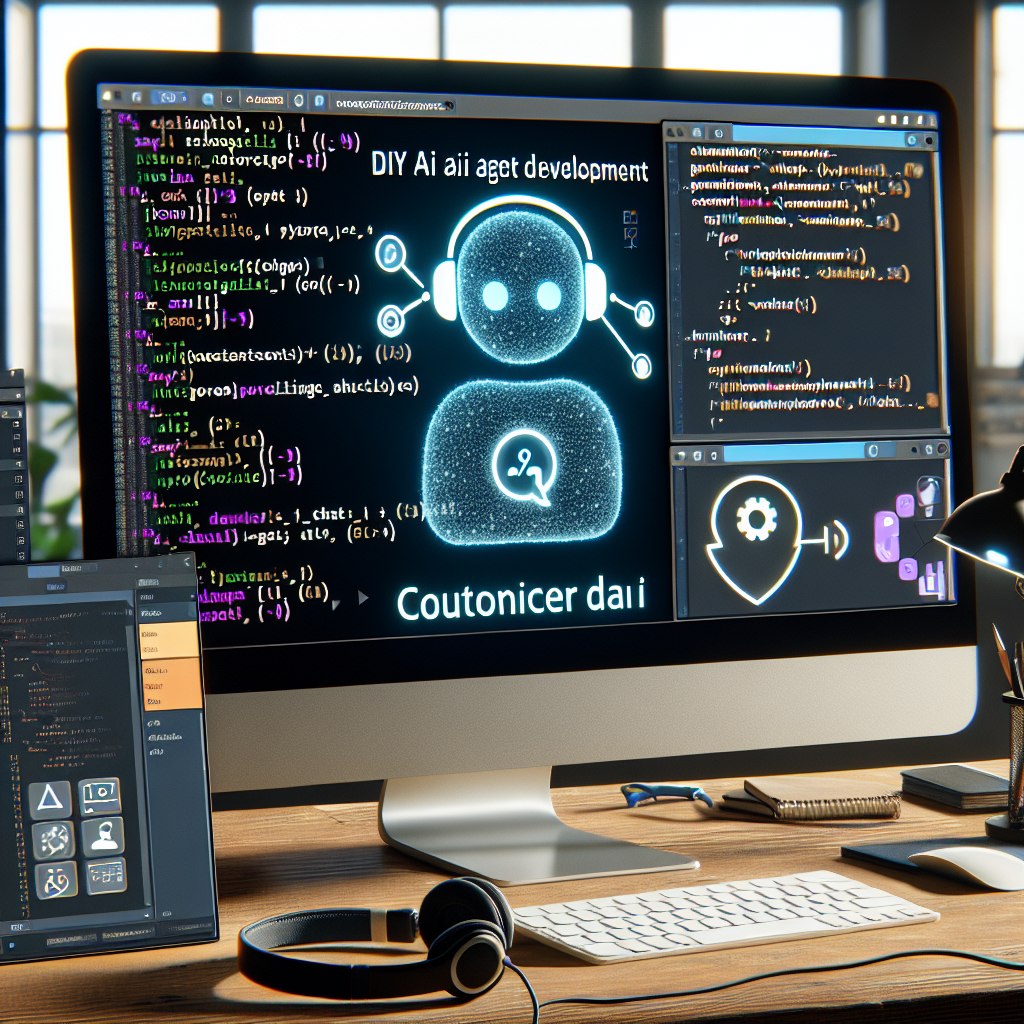
Selecting the right AI tools and platforms is a critical step in developing your DIY AI agent. The choice depends on your specific business needs and technical expertise. Popular platforms like TensorFlow and PyTorch offer robust frameworks for machine learning and deep learning tasks. These are ideal for those who want extensive customization and control over their AI models. For businesses seeking simplicity and quick deployment, platforms like Microsoft’s Azure AI and Google’s AI Platform provide ready-to-use models and services. These are perfect for automating customer service or personalizing user experiences with minimal coding. Additionally, consider scalability and integration capabilities when choosing a platform, ensuring it can grow with your business needs. Evaluating the support and community resources available for these tools is also important, as they can offer valuable assistance throughout your AI development journey. This strategic selection process ensures your AI agent is effective and sustainable.
Essential Steps to Create AI Agent
Creating an AI agent involves several essential steps to ensure it meets your business objectives effectively. Start by defining the purpose and scope of your AI agent—whether it’s automating customer service or personalizing user experiences. Next, gather and prepare your dataset, which is crucial for training your AI model. Ensure it’s clean, relevant, and comprehensive to improve accuracy. Then, choose the right AI tools and platforms that align with your technical skills and business needs. Develop and train your AI model using these tools, iterating as necessary to enhance performance. After training, test your AI agent thoroughly in various scenarios to ensure reliability and accuracy. Finally, deploy the AI agent within your business operations, monitoring performance and making adjustments as required. This systematic approach not only facilitates a successful AI development process but also ensures that your AI agent delivers tangible benefits to your business.
Automating Customer Service
Benefits of AI-Powered Automation
AI-powered automation offers significant benefits for customer service, transforming how businesses interact with their clients. One of the primary advantages is enhanced efficiency. AI agents can handle a large volume of inquiries simultaneously, reducing wait times and ensuring customers receive prompt service. This capability improves customer satisfaction and boosts loyalty. Additionally, AI automation reduces operational costs by minimizing the need for extensive human resources. It allows businesses to allocate their workforce to more strategic tasks, maximizing productivity. AI systems also provide consistent service quality, maintaining accuracy and reliability in responses, which strengthens brand reputation. Moreover, AI-powered tools can analyze customer interactions to provide insights into consumer behavior, facilitating personalized service and targeted marketing strategies. Ultimately, integrating AI into customer service operations enables businesses to deliver superior service while optimizing costs and resources, paving the way for sustainable growth and competitive advantage.
Implementing a DIY AI Agent for Support
Implementing a DIY AI agent for support involves a strategic approach to enhance customer service capabilities. Start by identifying the most frequent and repetitive inquiries your business receives. This will help you tailor your AI agent to handle these specific tasks efficiently. Next, ensure your AI agent is equipped with a comprehensive knowledge base that covers all necessary information related to your products or services. Training your AI model on this data is crucial for providing accurate responses. Once your AI agent is ready, integrate it into your existing customer service platforms, such as live chat or email support systems. Monitor its performance closely, collecting feedback to refine its capabilities and address any shortcomings. Regular updates and training will help your AI agent adapt to new queries and maintain high service standards. By implementing a DIY AI agent, businesses can offer faster, more reliable support, enhancing customer satisfaction and operational efficiency.
Case Studies: Success Stories
Numerous businesses have successfully implemented DIY AI agents, transforming their customer service operations. For instance, a small e-commerce company integrated an AI agent to handle common customer inquiries, such as order tracking and product availability. This move resulted in a 40% reduction in response times and a marked increase in customer satisfaction scores. Another example is a healthcare provider that utilized AI agents to manage appointment bookings and patient queries. This implementation not only streamlined the administrative workload but also improved patient engagement by providing timely responses. A tech startup, on the other hand, leveraged AI to offer personalized product recommendations, enhancing user experiences and boosting sales conversions by 30%. These case studies highlight the versatility and effectiveness of AI-powered automation in various industries. By adopting AI agents, businesses can achieve greater efficiency, reduce costs, and deliver exceptional service, demonstrating the transformative potential of AI in customer service.
Personalizing User Experiences
Why Personalization Matters
Personalization is crucial in today’s digital landscape as it significantly enhances user experiences. When businesses tailor their services or content to individual preferences, they create a more engaging and relevant interaction for each customer. This approach leads to higher customer satisfaction and loyalty, as users feel understood and valued. Personalization also increases conversion rates by presenting customers with products or services that match their interests and needs. In e-commerce, for instance, personalized recommendations can boost sales and average order value. Additionally, personalized marketing messages are more likely to capture attention and drive action compared to generic ones. By leveraging AI, businesses can analyze user data in real-time to deliver these personalized experiences efficiently. As a result, personalization not only improves customer engagement but also provides a competitive edge by differentiating a brand in a crowded market, leading to long-term business success.
Creating AI-Driven Personalization
Creating AI-driven personalization involves leveraging artificial intelligence to tailor user experiences dynamically. Start by collecting and analyzing user data, such as browsing history, purchase patterns, and feedback. This information is crucial for understanding individual preferences and behaviors. With AI tools, businesses can process this data in real-time, identifying trends and making predictions. Implement machine learning algorithms to continuously learn from user interactions, refining personalization strategies over time. Use AI to develop personalized recommendations, offers, and content that resonate with each customer. For instance, streaming services can suggest shows based on viewing history, while e-commerce platforms can recommend products aligned with past purchases. Integrating AI-driven personalization across all customer touchpoints ensures a consistent and engaging experience. Regularly evaluate the effectiveness of your personalization efforts, making adjustments as needed to optimize outcomes. By harnessing AI for personalization, businesses can enhance customer relationships, increase engagement, and drive growth.
Tools for Enhanced User Interaction
To enhance user interaction, businesses can utilize a range of AI tools designed for personalization and engagement. Customer Relationship Management (CRM) systems with AI capabilities, such as Salesforce Einstein, offer insights into customer behavior, enabling targeted marketing strategies. AI chatbots, like those powered by Dialogflow or IBM Watson, provide real-time, personalized interactions, effectively handling inquiries and offering recommendations based on user data. For content personalization, tools like Optimizely allow businesses to tailor website experiences to individual users, increasing engagement and conversion rates. Recommendation engines, such as those used by platforms like Spotify and Amazon, analyze user preferences to suggest relevant content or products. Additionally, AI-driven analytics tools help monitor user interactions, providing valuable feedback for continuous improvement. Integrating these tools into your business strategy not only enhances user experience but also drives customer satisfaction and loyalty, ultimately leading to increased profitability and a stronger market position.
Resources for AI Development
Best AI Development Tutorials
For those looking to dive into AI development, several top-notch tutorials can guide you through the process. Coursera offers a comprehensive “Machine Learning” course by Andrew Ng, providing foundational knowledge in AI principles and practical applications. For a more hands-on approach, Udacity’s “Deep Learning Nanodegree” offers interactive projects that cover neural networks and other AI techniques. The platform also provides valuable insights into real-world AI use cases. For beginners, YouTube channels like “3Blue1Brown” explain complex AI concepts through intuitive visualizations, making learning accessible and engaging. Additionally, the TensorFlow website offers detailed guides and tutorials for building AI models, catering to both novices and experienced developers. Platforms like Kaggle provide datasets and community forums, enabling learners to practice and share knowledge. These resources collectively equip aspiring AI developers with the skills and confidence needed to create innovative AI solutions and drive their projects forward successfully.
Community Forums and Support
Engaging with community forums and support networks is invaluable for AI development. These platforms provide a space for developers to share insights, troubleshoot issues, and collaborate on projects. Stack Overflow is a popular forum where developers can ask questions and receive guidance from experienced professionals in the field. The TensorFlow community forum offers a dedicated space for discussing model development, offering solutions to common challenges and sharing innovative applications of AI. Reddit’s r/MachineLearning community is another excellent resource for staying updated on the latest AI trends and engaging in discussions with fellow enthusiasts. GitHub is not only a repository for code but also a place where developers can contribute to open-source AI projects and learn from existing codebases. Engaging with these communities fosters a deeper understanding of AI concepts and provides ongoing support as you advance your AI development skills. Through collaboration, you can accelerate your learning and enhance your AI projects with diverse perspectives.
Staying Updated on AI Trends
Staying updated on AI trends is crucial for anyone involved in AI development. The field of artificial intelligence is rapidly evolving, with new advancements emerging regularly. Subscribing to AI-focused publications like MIT Technology Review and following platforms like Medium’s Towards Data Science can keep you informed on the latest breakthroughs and research. Attending conferences and webinars, such as those hosted by AI giants like Google and Microsoft, offers insights into cutting-edge technologies and industry applications. Podcasts like “AI Alignment” provide discussions on the ethical and societal impacts of AI, broadening your understanding of the field. Engaging with AI communities on social media platforms like Twitter and LinkedIn is also beneficial, as these networks often share real-time updates and expert opinions. By consistently engaging with these resources, you can ensure that your knowledge remains current, enabling you to leverage the most recent innovations in your AI projects and strategies.


