

AI Agents for Customer Service and Retail
As the digital landscape evolves, AI agents are rapidly becoming indispensable allies in the realms of customer service and retail, paving the way for enhanced customer experiences and operational efficiency. These cutting-edge tools are capable of automating routine interactions, ensuring customers receive round-the-clock support, and delivering personalized recommendations that resonate with individual preferences. For business owners and retail managers striving to elevate customer satisfaction and boost sales efficiency, the strategic implementation of AI agents is key. In this piece, we’ll delve into the transformative potential of these intelligent systems and share practical tips for integrating them seamlessly into your business operations.
Transforming Customer Interactions
Automating Routine Queries
AI agents excel in handling routine queries, freeing up valuable time for customer service staff to focus on more complex issues. By harnessing natural language processing, AI systems can understand and respond to basic questions about product details, order status, or store hours. This not only speeds up response times but also ensures accuracy and consistency in interactions. Businesses can benefit from improved efficiency and reduced operational costs. Moreover, customers appreciate the convenience of receiving instant answers to their queries anytime, anywhere. This shift towards automation enhances the overall customer experience by reducing wait times and increasing satisfaction levels. Implementing AI to manage routine inquiries allows companies to maintain high levels of customer service without the need for additional staffing.

Providing 24/7 Support
AI agents offer the significant advantage of providing round-the-clock support, a feature that is increasingly becoming a standard expectation among consumers. With AI, customer service is no longer confined to traditional business hours. Customers can get assistance at any time, whether they’re shopping late at night or have an urgent issue on a weekend. This ensures that customer needs are met promptly, leading to enhanced satisfaction and loyalty. The ability of AI systems to handle inquiries without fatigue or error also maintains service quality consistently. Businesses benefit from this through increased operational efficiency and the ability to cater to a global audience without the constraints of time zones. By integrating AI agents for 24/7 support, companies can enhance their customer service offerings and potentially increase sales by capturing opportunities that might otherwise be missed.
Enhancing Customer Satisfaction
AI agents play a crucial role in elevating customer satisfaction by delivering faster, more personalized service. These intelligent systems can analyze customer data to tailor interactions, making each experience unique and relevant. For instance, when a customer contacts support, AI can quickly access their purchase history and preferences to provide customized assistance or recommend complementary products. This level of personalization makes customers feel valued and understood, fostering a stronger brand connection. Additionally, AI’s ability to provide immediate responses to a wide range of inquiries significantly reduces wait times, a major contributor to customer dissatisfaction. By ensuring consistent and high-quality service, AI agents help businesses build trust and reliability with their customers. Ultimately, this leads to increased customer loyalty and positive word-of-mouth, both of which are invaluable in a competitive marketplace.

Boosting Retail Efficiency
Personalized Product Recommendations
AI agents are revolutionizing retail by offering personalized product recommendations that cater to individual customer preferences. By analyzing vast amounts of data, including browsing history, past purchases, and even social media activity, AI can predict customer needs and suggest products that are most likely to appeal to them. This personalized approach not only enhances the shopping experience but also significantly boosts conversion rates. Customers are more likely to make purchases when they feel the recommendations are tailored to their tastes and needs. Furthermore, personalized recommendations can lead to larger basket sizes, as customers often discover new products they hadn’t initially considered. Retailers benefit from increased sales and customer loyalty, as shoppers are more inclined to return to a brand that consistently meets their individual preferences. By leveraging AI for product recommendations, retailers can create a more engaging and efficient shopping journey.

Streamlining Purchase Processes
AI agents significantly streamline purchase processes, simplifying the shopping experience for customers and increasing efficiency for retailers. Through AI-powered chatbots, customers can receive real-time assistance in navigating product catalogs, comparing items, and completing transactions. These agents can guide users seamlessly through the buying journey, reducing the likelihood of cart abandonment. Additionally, AI systems can automate inventory management, alerting when stock is low and predicting demand to ensure popular products remain available. This automation minimizes human error and optimizes supply chain operations, leading to better inventory turnover and fewer out-of-stock situations. For retailers, streamlined processes mean reduced operational costs and improved customer satisfaction, as shoppers enjoy faster and more convenient transactions. By integrating AI into the purchase process, businesses can offer a smoother, more efficient experience that meets modern consumer expectations and drives sales growth.
Increasing Sales Conversion Rates
AI agents are key players in boosting sales conversion rates by enhancing the customer journey from start to finish. With capabilities like personalized recommendations and predictive analytics, AI can identify potential buyers and tailor marketing efforts to their specific needs. These agents can engage customers through targeted messaging, nudging them toward making a purchase decision. Additionally, AI can analyze behavior patterns to anticipate questions or objections, providing instant support to keep the sales process moving smoothly. By optimizing the timing and relevance of interactions, AI increases the likelihood of conversions. Moreover, AI-driven insights allow retailers to continuously refine their strategies, ensuring that marketing efforts are both effective and efficient. As a result, businesses see higher conversion rates, translating to increased revenue and growth. Implementing AI in retail not only enhances customer interactions but also empowers businesses to leverage data-driven strategies for maximizing sales outcomes.

Implementing AI Agents Effectively
Key Considerations for Deployment
Deploying AI agents requires careful planning to ensure they integrate smoothly into existing business operations. First, businesses need to clearly identify their goals and the specific problems they aim to solve with AI. Understanding these objectives helps in selecting the right AI tools and setting measurable benchmarks for success. It’s also crucial to consider data quality, as AI systems rely heavily on accurate and comprehensive datasets to function optimally. Ensuring data privacy and security is another critical aspect, particularly in customer-facing roles where sensitive information is handled. Moreover, businesses should focus on training staff to work alongside AI, fostering a collaborative environment that maximizes the strengths of both human employees and AI systems. Lastly, continuous monitoring and iteration are necessary to refine AI performance and adapt to evolving business needs. By addressing these considerations, companies can effectively leverage AI agents to enhance their operations and customer interactions.
Integrating with Existing Systems
Integrating AI agents with existing systems is essential for a seamless transition and maximizing the potential benefits. Businesses must first assess their current infrastructure to identify compatibility and potential integration challenges. This involves ensuring that AI solutions can communicate effectively with existing software, databases, and communication platforms. Utilizing APIs and middleware can facilitate smooth data exchange between systems, allowing AI agents to access necessary information without disrupting operations. Additionally, it’s important to involve IT teams early in the integration process to address technical issues and optimize system performance. Training employees on how to use AI tools in conjunction with existing processes is also crucial for a successful transition. This ensures that staff can leverage AI capabilities to enhance productivity and efficiency. By thoughtfully integrating AI agents, businesses can improve their operational workflows and deliver enhanced customer experiences.
Training and Monitoring AI Performance
Training AI agents effectively is crucial for them to perform their intended tasks accurately. Initially, AI systems require substantial amounts of quality data to learn and adapt to the specific needs of a business. This involves feeding the AI with relevant datasets and continuously updating them to reflect changing customer behaviors and market trends. Equally important is the ongoing monitoring of AI performance to ensure it operates within expected parameters and delivers the desired outcomes. Businesses should implement feedback loops where data from customer interactions is used to refine AI algorithms, enhancing their accuracy over time. Regularly reviewing AI outputs can help identify any discrepancies and areas for improvement. Additionally, involving cross-functional teams in monitoring efforts ensures that AI systems align with business goals and compliance standards. By investing in thorough training and diligent monitoring, companies can maintain high performance levels from their AI agents, driving operational efficiency and customer satisfaction.
Best Practices for AI Adoption
Overcoming Common Challenges
Adopting AI agents in business operations comes with its set of challenges, but understanding and addressing these proactively can lead to successful implementation. One common hurdle is resistance to change from employees who may fear automation will replace their roles. To combat this, it’s essential to communicate the benefits of AI and how it can augment their work, enhancing productivity and job satisfaction. Another challenge is ensuring data privacy and security, as AI systems often require access to sensitive information. Businesses must establish robust data protection protocols and comply with relevant regulations to maintain trust with customers. Additionally, the initial cost of AI deployment can be a concern. However, businesses should consider AI as a long-term investment that can lead to significant savings and efficiency gains. By tackling these challenges head-on, companies can pave the way for a smooth AI adoption process and fully leverage its advantages.
Ensuring Data Security and Privacy
Data security and privacy are paramount when adopting AI technologies, especially in customer-facing roles where sensitive information is handled. Businesses must implement comprehensive security measures to protect data from breaches and unauthorized access. This includes using encryption for data transmission, employing secure authentication methods, and regularly updating security protocols. Complying with data protection regulations such as GDPR or CCPA is critical to maintaining customer trust and avoiding legal repercussions. Moreover, businesses should establish clear data governance policies that define how data is collected, stored, and used by AI systems. Conducting regular audits and vulnerability assessments helps identify potential security gaps and ensures compliance with industry standards. Additionally, incorporating privacy-by-design principles in AI development can mitigate risks from the outset. By prioritizing data security and privacy, companies can confidently implement AI solutions while safeguarding customer information and building strong, trustworthy relationships.

Measuring Success and ROI
Measuring the success and return on investment (ROI) of AI initiatives is crucial for understanding their impact and guiding future strategies. Businesses should establish clear metrics and KPIs that align with their objectives, such as increased efficiency, enhanced customer satisfaction, or higher sales conversion rates. Tracking these indicators over time provides insights into the effectiveness of AI deployments and helps identify areas for improvement. It’s also important to consider both quantitative and qualitative measures, as AI can influence customer experiences and brand perception in ways that aren’t immediately apparent in numbers. Conducting regular evaluations can help businesses assess the long-term benefits and costs associated with AI. This includes examining operational efficiencies, cost savings, and revenue growth attributable to AI systems. By systematically measuring success and ROI, companies can make informed decisions about scaling AI initiatives and ensure that they continue to deliver value.
Future of AI in Retail and Service
Emerging Trends and Innovations
The future of AI in retail and service is brimming with exciting trends and innovations that promise to redefine customer interactions. One emerging trend is the use of AI for hyper-personalization, where advanced algorithms analyze vast data sets to tailor experiences uniquely for each customer, enhancing satisfaction and loyalty. Another significant innovation is the integration of AI with augmented reality (AR), offering immersive shopping experiences that allow customers to visualize products in their own environment before purchase. Additionally, voice-activated AI assistants are gaining traction, enabling hands-free, conversational shopping and service experiences. AI is also playing a pivotal role in predictive analytics, helping businesses anticipate market trends and customer needs with greater accuracy. As these technologies evolve, they are set to make retail and customer service more intuitive, efficient, and engaging. Businesses that embrace these trends early will likely gain a competitive edge in a rapidly changing market landscape.
Preparing for Technological Advancements
As AI continues to evolve, businesses in retail and service sectors must prepare for rapid technological advancements to remain competitive. This preparation begins with fostering a culture of innovation and adaptability within the organization. Encouraging continuous learning and upskilling among employees ensures that teams are equipped to leverage new tools and technologies effectively. Investing in flexible and scalable infrastructure is also crucial, allowing businesses to integrate emerging AI solutions without significant disruptions. Staying informed about industry trends and collaborating with technology partners can provide valuable insights and access to cutting-edge developments. Furthermore, businesses should focus on creating a robust data strategy, as high-quality data is the foundation of effective AI applications. By proactively preparing for technological advancements, companies can capitalize on AI innovations, improve their operations, and deliver superior customer experiences in an increasingly digital marketplace.
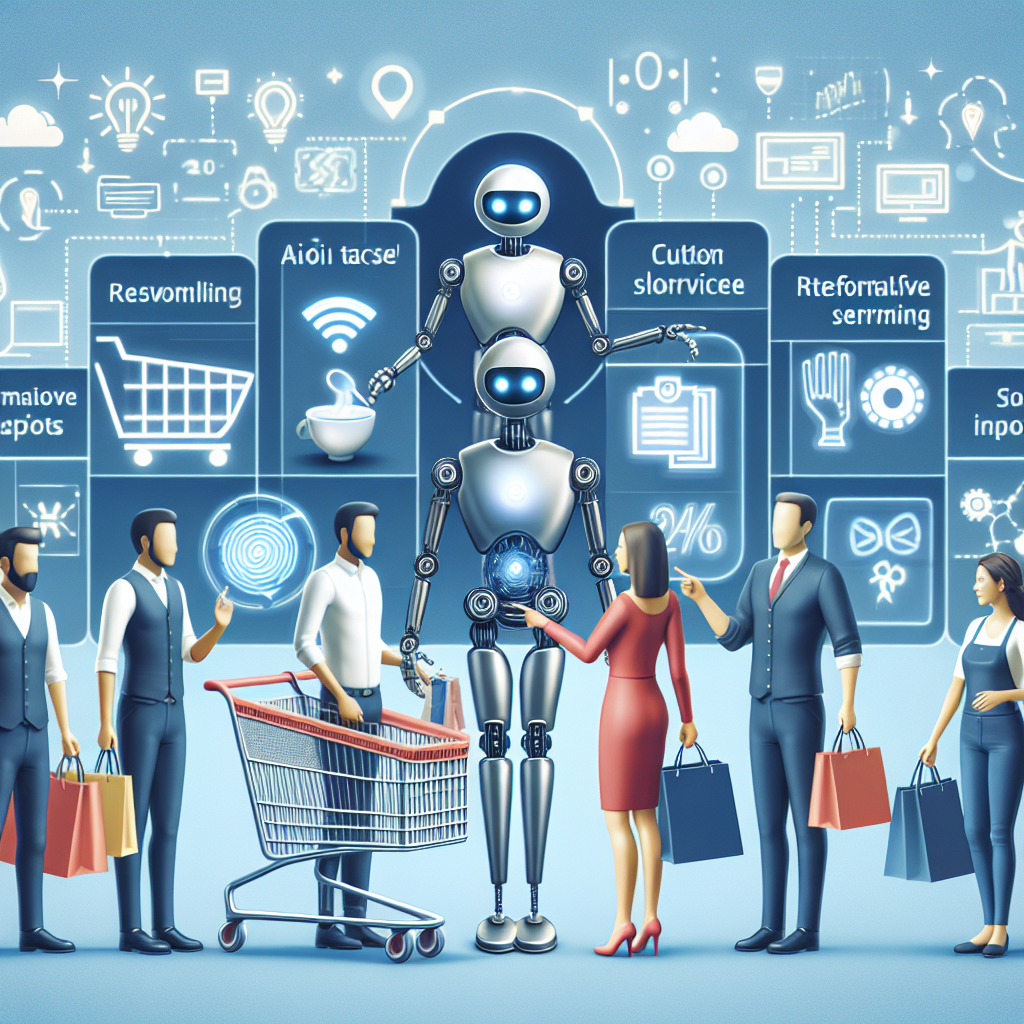
Long-term Benefits and Opportunities
The integration of AI in retail and service sectors offers numerous long-term benefits and opportunities that can transform business operations and customer relationships. One major advantage is the potential for sustained cost savings through automation of routine tasks and optimization of resource allocation. AI’s ability to provide deep insights from data analytics empowers businesses to make informed decisions, enhancing strategic planning and market positioning. Furthermore, AI-driven personalization fosters stronger customer loyalty by offering tailored experiences that resonate with individual preferences. As AI technology advances, it opens up opportunities for innovative offerings such as virtual shopping assistants and predictive maintenance, enhancing service delivery and customer satisfaction. Businesses that effectively leverage AI can also gain competitive advantages by quickly adapting to market changes and consumer behavior shifts. Over time, these benefits contribute to increased revenue, improved efficiency, and a more agile business model, positioning companies for sustained growth and success in a rapidly evolving digital landscape.


